
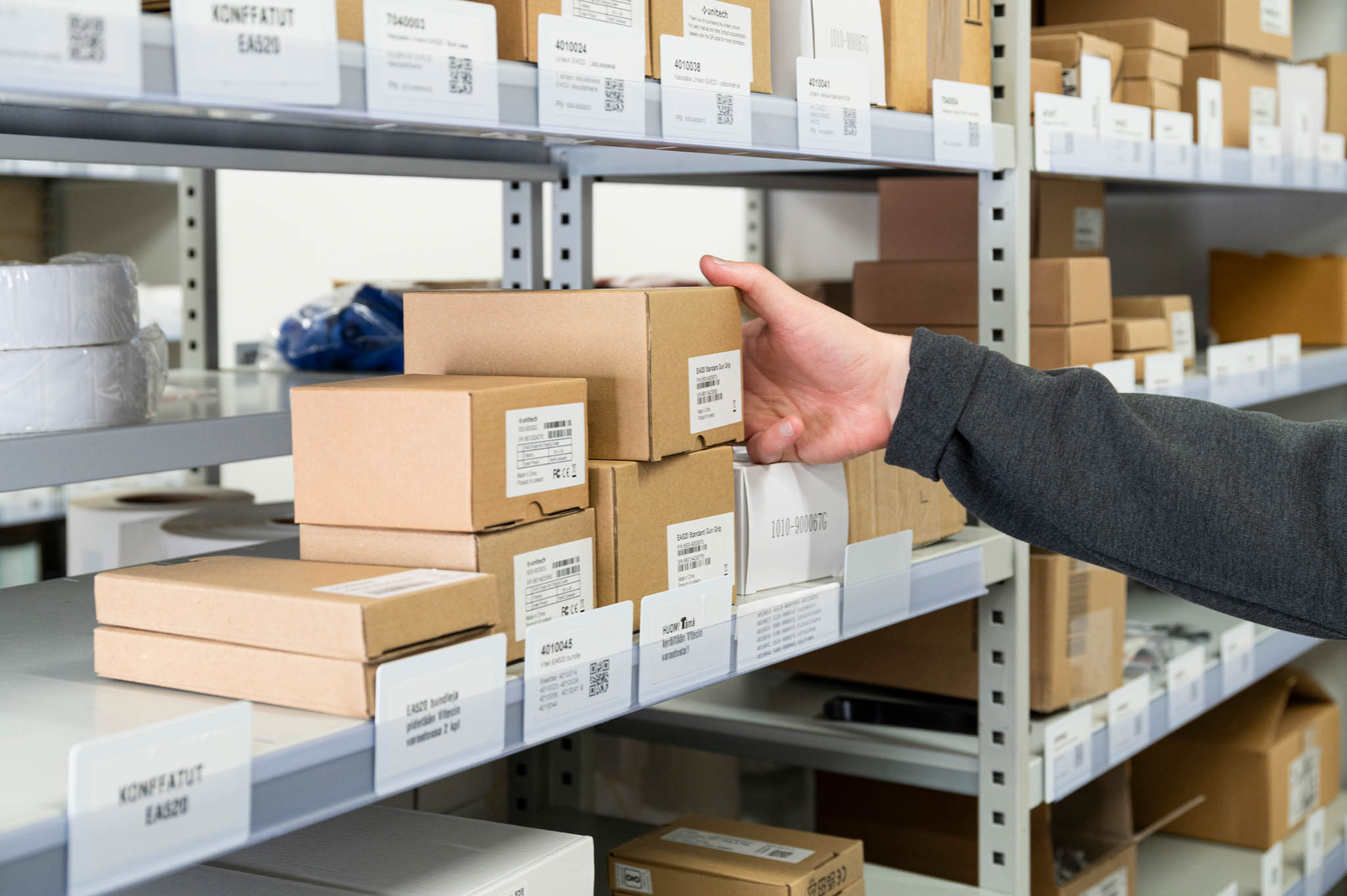
Consignment Stock Solution for B2B Distribution – Tech, Benefits, ROI
Consignment stock has been part of B2B commerce for decades, but the way it works in practice has changed dramatically. What once required clipboards, phone calls, and manual stocktakes can now run almost entirely on its own. For distributors and their customers, that shift opens up real competitive advantages—but only when the underlying system is built on the right foundations.
This article walks through what makes consignment inventory work in modern B2B distribution, where traditional approaches tend to break down, and how to think about the return on investment when evaluating a move to a smarter consignment stock solution.
What makes consignment stock critical for B2B distribution
In B2B distribution, the relationship between a supplier and a customer is rarely transactional in the simple sense. Customers need products available exactly when they need them, often without the time or resources to manage purchasing cycles themselves. Consignment stock solves this by placing inventory at the customer’s location while the supplier retains ownership until the goods are actually used. It removes friction from the buying process and keeps operations running without interruption.
For distributors, this model builds loyalty in a way that price alone cannot. When your products are already on-site and ready to use, you become part of your customer’s daily workflow. That kind of embedded presence is hard for a competitor to displace, especially when the arrangement is backed by reliable replenishment and accurate records.
The model also benefits the end customer in concrete ways. They avoid tying up capital in large upfront purchases. They reduce the risk of stockouts. And they spend less time on procurement administration. In industries like industrial maintenance, technical wholesale, and equipment rental, these advantages are not marginal. They directly affect how well operations run day to day.
Consignment inventory also supports better demand planning for both parties. Because usage data flows back to the supplier, it becomes possible to anticipate needs rather than react to them. That kind of visibility strengthens the supply chain and reduces the waste that comes from emergency orders and last-minute deliveries.
Why traditional inventory models fall short in B2B
The core problem with traditional inventory management in B2B distribution is visibility—or rather, the lack of it. In a conventional setup, the supplier ships goods and loses sight of them. The customer manages physical stock that may or may not be counted regularly. By the time anyone notices a shortage, the damage is already done.
Manual stocktaking is slow and prone to error. A count done once a month gives you a snapshot of one moment in time. Everything that happens between counts is essentially invisible. Products get used, misplaced, or consumed without any record being created. The result is a growing gap between what the system says is in stock and what is actually there.
This gap creates a chain of problems. Replenishment orders get placed too late or too early. Customers run out of critical items unexpectedly. Suppliers over-deliver to compensate for uncertainty, which ties up capital and creates storage problems. Neither party has the clear picture it needs to make good decisions.
Traditional models also struggle with accountability. When there is no automatic record of who took what and when, it becomes very difficult to track consumption patterns or identify waste. In environments where products have real cost, that lack of traceability adds up. The administrative burden of trying to reconcile records manually only makes things worse.
Understanding the technology behind modern consignment solutions
Modern consignment stock management works by creating a continuous, automatic record of every product movement. The moment an item leaves a shelf or a storage unit, the system knows about it. This happens without anyone needing to scan, type, or report anything manually. The result is an inventory record that stays accurate in real time, not just after a periodic count.
Automatic identification and tracking
The foundation of any smart consignment system is the ability to identify products reliably and quickly. Each item carries a small tag that the system can read automatically. When products pass through a designated point, such as a self-service cabinet or a storage entrance, their movement is logged instantly. This means the system always knows what is present, what has been taken, and by whom.
User identification works in a similar way. A person accessing the storage area confirms their identity with a simple tap or card swipe. This creates a clear record linking each product withdrawal to a specific person. That level of detail is valuable not just for billing but also for understanding usage patterns across different teams or job sites.
Real-time data and automatic replenishment
Once the system has accurate, live data, it can act on that data automatically. When stock falls below a set level, a replenishment alert or order is triggered without anyone needing to check. This removes the guesswork from restocking and ensures that shortfalls are caught early, before they become a problem for the customer.
The data also feeds into reporting. Distributors can see which products are moving fastest at which locations, spot unusual consumption patterns, and plan deliveries more efficiently. Over time, this builds a detailed picture of demand that supports better purchasing decisions and reduces the cost of carrying excess stock.
Integration with existing business systems means the consignment data does not sit in isolation. It connects to invoicing, ERP systems, and other back-office tools, so the information flows where it is needed without manual data entry. This is where modern solutions like Simple Storage demonstrate clear practical value by connecting the physical reality of the shelf to the digital systems that run the business.
Key factors in a successful consignment stock implementation
Getting consignment stock right is not just about choosing the right technology. How the program is set up and managed has a significant effect on whether it delivers the expected results. A few factors consistently separate successful implementations from those that struggle.
Clear ownership and processes
Both parties need to agree upfront on who is responsible for what. Who triggers replenishment? Who handles discrepancies? What happens when a product is damaged or goes missing? These questions are straightforward to answer before a program launches and very difficult to resolve after problems arise. Documenting the process clearly from the start prevents confusion and protects the relationship.
The physical setup of the storage location also matters. Products need to be stored in a way that makes automatic identification reliable. If items are stacked haphazardly or stored outside the designated area, the system cannot do its job. A brief setup process, including tagging products and installing any necessary scanning equipment, is a small investment that pays back quickly in data quality.
Choosing the right product categories
Not every product is a good fit for consignment. The model works best for items that are consumed regularly, have predictable usage patterns, and are important enough to the customer’s operations that a stockout would cause a real problem. Consumables, maintenance supplies, and frequently used spare parts are classic examples.
High-value, slow-moving items can also work well in consignment arrangements, particularly when the customer cannot justify purchasing in bulk. In these cases, the supplier takes on the carrying cost in exchange for guaranteed placement and usage visibility. The key is to match the product profile to the consignment model rather than applying the model uniformly across an entire catalog.
Communication and review
A consignment program is not a set-and-forget arrangement. Regular reviews between supplier and customer help catch issues early, identify opportunities to expand the program, and keep both parties aligned on goals. The data generated by the system makes these conversations much more productive because both sides are working from the same accurate picture rather than comparing different versions of events.
Evaluating ROI from consignment inventory programs
Return on investment from consignment stock is real, but it shows up in several different places, and not all of them are immediately obvious. Understanding where the value comes from helps set realistic expectations and makes it easier to measure success over time.
The most direct financial benefit for the customer is reduced tied-up capital. Instead of purchasing large quantities upfront, they pay only for what they use. That frees up cash for other priorities. For the supplier, the benefit comes from stronger customer retention and more predictable revenue, because a customer who depends on your consignment program is less likely to switch to another source.
Operational savings are another significant source of value. When replenishment is automatic and stock records are accurate, the time spent on manual counts, emergency orders, and reconciliation drops considerably. Staff who previously spent time managing inventory can focus on more productive work. In environments where labor is a significant cost, this adds up quickly.
Waste reduction is a benefit that is easy to overlook but often substantial. When you know exactly what is being used and when, you stop over-ordering. Products do not sit on shelves past their useful life. Expensive items are not lost or consumed without a record. The combination of better visibility and automatic tracking tends to reduce shrinkage noticeably compared to unmanaged or manually managed stock.
The data generated by a well-run consignment program also has strategic value. Usage patterns reveal which products are genuinely essential to a customer’s operations, which creates opportunities for deeper partnerships. They also support more accurate demand forecasting, which reduces the cost of holding safety stock across the supply chain. These longer-term benefits are harder to quantify immediately, but they compound over time and contribute meaningfully to the overall return.
How Aksulit Oy helps B2B distributors launch a consignment stock solution
Running a consignment stock program well requires more than good intentions. It requires a system that keeps records accurate automatically, alerts the right people at the right time, and connects to the tools the business already uses. That is exactly what Aksulit Oy has built.
Aksulit Oy is a Finnish software company based in Laukaa, near Jyväskylä, with more than two decades of experience developing inventory and logistics management systems. Its Simple Storage solution is designed specifically for situations like consignment stock management in B2B distribution. Here is what the system delivers in practice:
- Automatic stock tracking so every product movement is recorded without manual input
- User identification that links each withdrawal to a specific person, providing full accountability
- Real-time stock levels visible from anywhere, at any time
- Automatic replenishment alerts triggered when stock falls below a defined threshold
- Reduced waste and shrinkage because nothing leaves the shelf unrecorded
- Integration with existing business systems so data flows directly into invoicing, ERP, and other back-office tools
- Fast inventory capability, with the system able to count up to a thousand products in ten seconds
Simple Storage uses RFID and NFC technology to achieve this level of automation. Each product carries an RFID tag, and the system reads these tags automatically as products move through the storage area. NFC-based user identification ensures that every transaction is attributed to the right person. The result is a complete, accurate picture of what is happening in every consignment location, updated in real time.
The system is already used across industrial maintenance, technical wholesale, equipment rental, and other B2B distribution contexts. It is designed to be straightforward to set up and easy to manage remotely, which matters when you are running consignment programs across multiple customer locations.
If you are a B2B distributor looking to launch or improve a consignment stock program, Aksulit Oy is worth talking to. Get in touch with the team to discuss your specific situation and find out how Simple Storage can fit into your operations.