
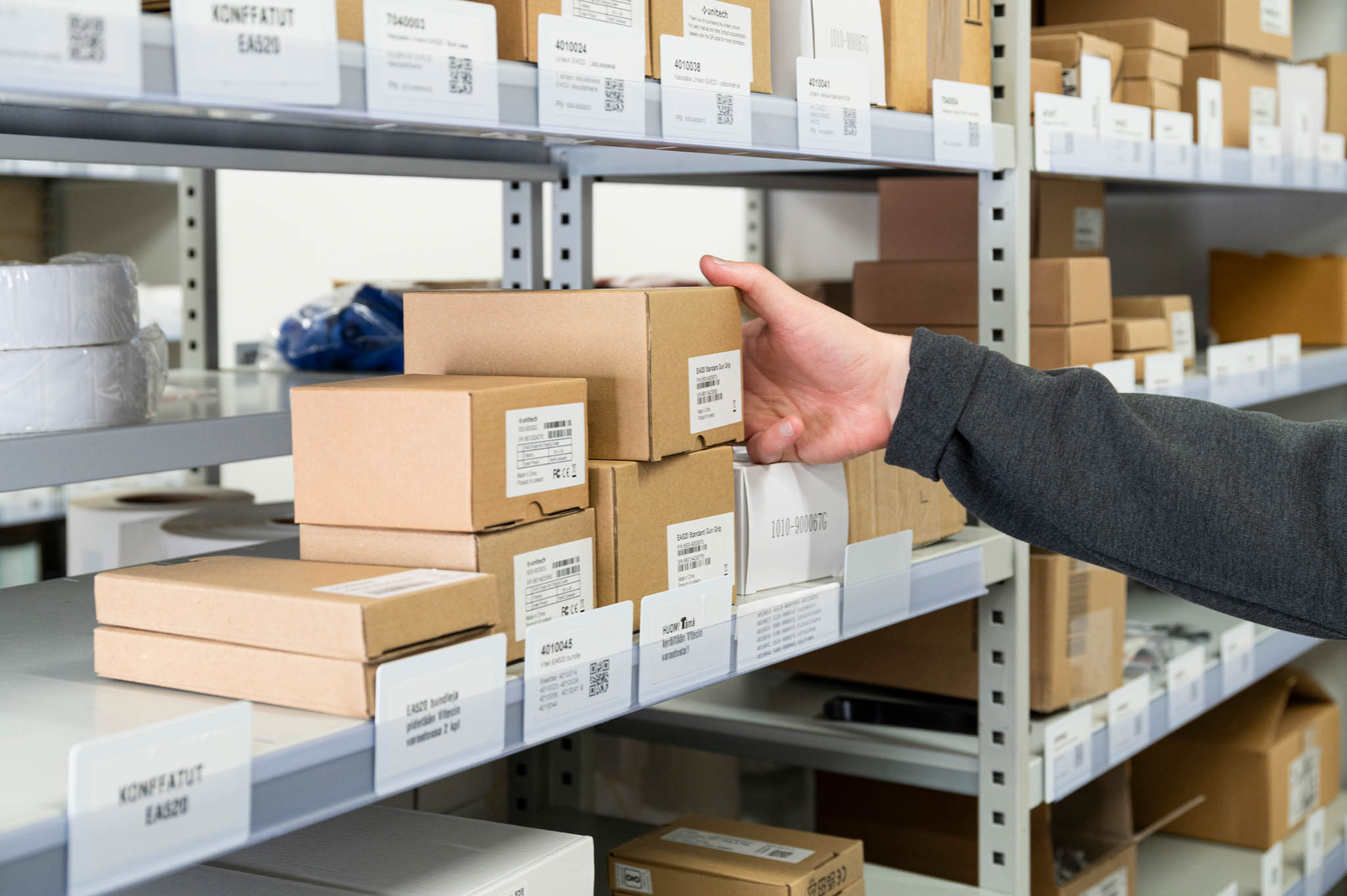
Serial Number Tracking for Capital Equipment and Tools
When a piece of equipment breaks down, is lost, or goes missing from a job site, the first question is usually the same: Where is it, and who had it last? Serial number tracking exists to answer that question quickly and reliably. For companies that manage capital equipment, tools, or other high-value assets, having a clear record of every individual item is not a nice-to-have; it is the foundation of responsible asset management.
This article explains why serial number tracking matters, what makes it genuinely difficult in practice, and how modern identification systems are changing the way businesses manage their physical assets. If you want to see how a practical tracking system works in real life, explore the Simple Pocket solution as a starting point.
Why serial number tracking matters for capital assets
Capital equipment represents a significant financial investment. A single industrial tool, medical device, or piece of construction machinery can cost tens of thousands of euros. When you multiply that across an entire fleet or tool inventory, the total value becomes substantial. Knowing exactly where each item is, what condition it is in, and who is responsible for it directly affects both financial control and operational safety.
Serial number tracking gives each physical item a unique identity. Unlike tracking a product category or a batch, serialized tracking follows the individual unit. This means you can see the full history of a specific drill, generator, or calibrated instrument: when it was purchased, who used it, when it was last serviced, and where it currently is.
From a compliance standpoint, many industries require documented traceability for regulated equipment. Maintenance schedules, warranty claims, and insurance records all depend on accurate, item-level data. Without serialized records, these processes become slow, error-prone, and costly.
There is also a practical loss-prevention dimension. Research in asset management consistently shows that untracked tools and equipment are far more likely to go missing, be misplaced, or sit idle in the wrong location. When every item has a traceable identity, accountability increases naturally across the organization.
What makes high-value equipment tracking uniquely complex
Tracking consumable goods is relatively straightforward. Capital equipment and tools present a different set of challenges. These assets move between people, locations, projects, and departments. They are repaired, modified, and sometimes replaced with similar-looking units. Keeping records accurate under these conditions requires more than a spreadsheet.
Multiple locations and users
High-value tools often travel. A calibration instrument might move from a workshop to a field site to a service depot within a single week. Each handoff is an opportunity for the record to break down. If the tracking system relies on manual logging, gaps appear quickly. People forget to check items in or out, especially under time pressure.
When multiple people share access to the same equipment pool, accountability becomes diffuse. Without a clear record of who took what and when, disputes over responsibility for damage or loss are difficult to resolve fairly.
Maintenance and lifecycle complexity
Capital assets require scheduled maintenance, periodic certification, and eventual retirement. Each of these events needs to be tied to the specific unit, not just the model. A tool that has been serviced, recalibrated, or modified may perform differently from an identical-looking unit that has not. Serialized records make this distinction possible.
Lifecycle tracking also supports better purchasing decisions. When you have accurate data on how long a specific type of equipment lasts under real-world conditions, you can plan replacements proactively rather than reactively.
Integration with financial and operational systems
Capital equipment appears on balance sheets. It has depreciation schedules, insurance valuations, and sometimes lease or rental arrangements attached to it. When physical tracking systems do not connect to financial or operational software, the same asset ends up recorded in multiple places with inconsistent data. Reconciling these records manually is time-consuming and introduces errors.
Key identification technologies for equipment and tools
The technology used to identify and track individual items has a direct impact on how accurate, fast, and practical the tracking system is. Three main approaches are widely used: barcodes, NFC, and RFID. Each has distinct characteristics that make it more or less suitable depending on the environment and the type of asset being tracked.
Barcode scanning
Barcodes are the most familiar identification method. They are inexpensive to produce, easy to print, and compatible with a wide range of scanning devices. For serial number tracking, a barcode label is applied to each item, and a scanner reads it during check-in, check-out, or inventory counts.
The main limitation is that barcodes require line-of-sight scanning. Each item must be individually presented to the scanner. In a busy warehouse or tool crib, this adds time to every transaction. Labels can also become damaged, dirty, or illegible in harsh environments.
NFC tags
NFC (Near Field Communication) tags work at very short range, typically a few centimeters. They are read by tapping a smartphone or dedicated reader against the tag. NFC is well suited to controlled-access scenarios, such as identifying a user who is checking out equipment or logging a tool that is being returned to a specific location.
NFC tags are more durable than printed barcodes and can store more data. They work well for individual item identification when the user is already handling the item directly.
RFID tags
RFID (Radio Frequency Identification) tags can be read without direct contact or line of sight, and multiple tags can be read simultaneously. This makes RFID particularly powerful for bulk inventory counting and for tracking items as they move through a doorway or scanning zone.
An RFID system can count and identify hundreds of items in seconds, without anyone manually scanning each one. This speed advantage is significant for large tool inventories or equipment rooms where frequent counts are needed.
Comparison: barcode vs. RFID for serialized asset tracking
- Barcode: Low cost per label, requires line-of-sight scanning, one item at a time, labels can degrade in harsh conditions, widely compatible with existing systems
- RFID: Higher upfront cost, no line of sight needed, multiple items read simultaneously, tags are more durable in industrial environments, faster inventory counts
- Best for barcodes: Smaller inventories, controlled environments, lower budgets, items that are always handled individually
- Best for RFID: Large inventories, high-traffic tool rooms, environments where speed and accuracy are critical, assets that move frequently
In practice, many organizations use a combination of both. Barcodes handle lower-value or slower-moving items, while RFID covers high-frequency or high-value assets where accuracy and speed matter most.
Best practices for implementing serial number tracking
Getting serial number tracking right from the start saves significant time and frustration later. The most common failure point is not the technology itself; it is the process design around the technology. A system that is technically capable but awkward to use will be bypassed or used inconsistently.
Start with a clear asset register
Before any labels are printed or tags are attached, create a complete list of the assets you intend to track. Include the make, model, existing serial number (if one exists), purchase date, and current location. This baseline register becomes the foundation of the tracking system.
It is tempting to start with only the most valuable items and expand later. This can work, but it creates a period during which the system provides an incomplete picture. A phased rollout with clear boundaries is better than a partial rollout with no clear plan.
Assign ownership and accountability
Every tracked asset should have a designated owner or responsible party. This does not mean one person is responsible forever. It means that at any given moment, the system records who currently holds each item or is accountable for it. Check-out and check-in processes should be simple enough that people actually use them.
User identification at the point of access is important. When someone checks out a tool, the system should record not just that the tool moved, but who moved it. This is where NFC-based user authentication works well: a quick tap with a personal tag confirms identity without slowing down the workflow.
Keep labels and tags in good condition
Physical identification tags are only useful if they remain readable. For tools that are used in rough environments, invest in durable labels or embedded RFID tags rather than standard paper labels. Build a routine for checking tag condition during regular maintenance cycles.
Integrate tracking with existing workflows
Tracking should happen as a natural part of what people already do, not as an additional step they have to remember. If someone picks up a tool from a storage cabinet, opening the cabinet or walking out through a doorway should be enough to trigger a record. The less manual effort required, the more consistent the data will be.
How professional tracking systems integrate with operations
A tracking system that exists in isolation from the rest of the business only solves part of the problem. The real value comes when asset data connects to the systems and workflows that people already rely on: maintenance schedules, procurement, project management, and financial reporting.
Modern asset tracking platforms are designed to feed data into existing software environments. When a tool is checked out, that event can automatically update a project cost record. When an item’s usage hours reach a maintenance threshold, a service request can be generated without anyone manually monitoring the data. These connections turn tracking from a record-keeping exercise into an active operational tool.
Real-time visibility is another key benefit of integrated systems. Rather than running a physical inventory count at the end of each month, managers can see current stock levels and asset locations at any moment. This changes how decisions are made. Procurement can be based on actual usage patterns rather than guesswork. Equipment can be redistributed between locations based on real demand rather than assumptions.
For organizations that manage equipment across multiple sites or lend tools to customers, integration also supports billing and accountability. When the system records exactly which items left the building, who took them, and when they were returned, disputes become rare and easy to resolve.
Reporting is another area where integration pays off. Automated reports on asset utilization, maintenance history, and inventory value give management a clear picture without requiring manual data collection. Over time, this data supports better decisions about what to buy, what to retire, and how to allocate resources.
How does Aksulit Oy help companies implement serial number tracking?
Aksulit Oy is a Finnish software development company based in Laukaa, near Jyväskylä, with over two decades of experience building identification and inventory management systems for a wide range of industries. The company specializes in smart storage solutions that make asset tracking accurate, automated, and practical for everyday use.
Their Simple product family addresses the core challenges described in this article. Here is what the system offers in practical terms:
- Automatic inventory counting: The smart cabinet can identify up to a thousand items in ten seconds, eliminating the need for manual counts.
- Item-level tracking: Every product in the system carries a unique tag, so you always know exactly which individual unit is where.
- User identification: Each access event is tied to a specific person, creating a clear record of who took what and when.
- Real-time stock visibility: Balances update automatically every time an item is taken or returned.
- Automatic replenishment alerts: The system notifies you when stock falls below a set level, so you can reorder before running out.
- Integration with existing systems: The platform connects to ERP, WMS, and other back-end systems, keeping data consistent across the organization.
- Mobile operations: Receiving, picking, and inventory tasks can all be handled from a mobile device.
The system works well for industrial maintenance tool rooms, equipment rental companies, technical wholesale distributors, and any organization where knowing the exact location and status of individual assets matters. Identification can be done through barcodes, NFC, or RFID, depending on the environment and requirements.
If you are ready to move from manual records to a system that tracks your capital equipment and tools automatically, take a closer look at what Aksulit Oy’s Simple solutions can do for your operation. To discuss your specific situation and find the right approach for your business, get in touch with the Aksulit Oy team directly.