
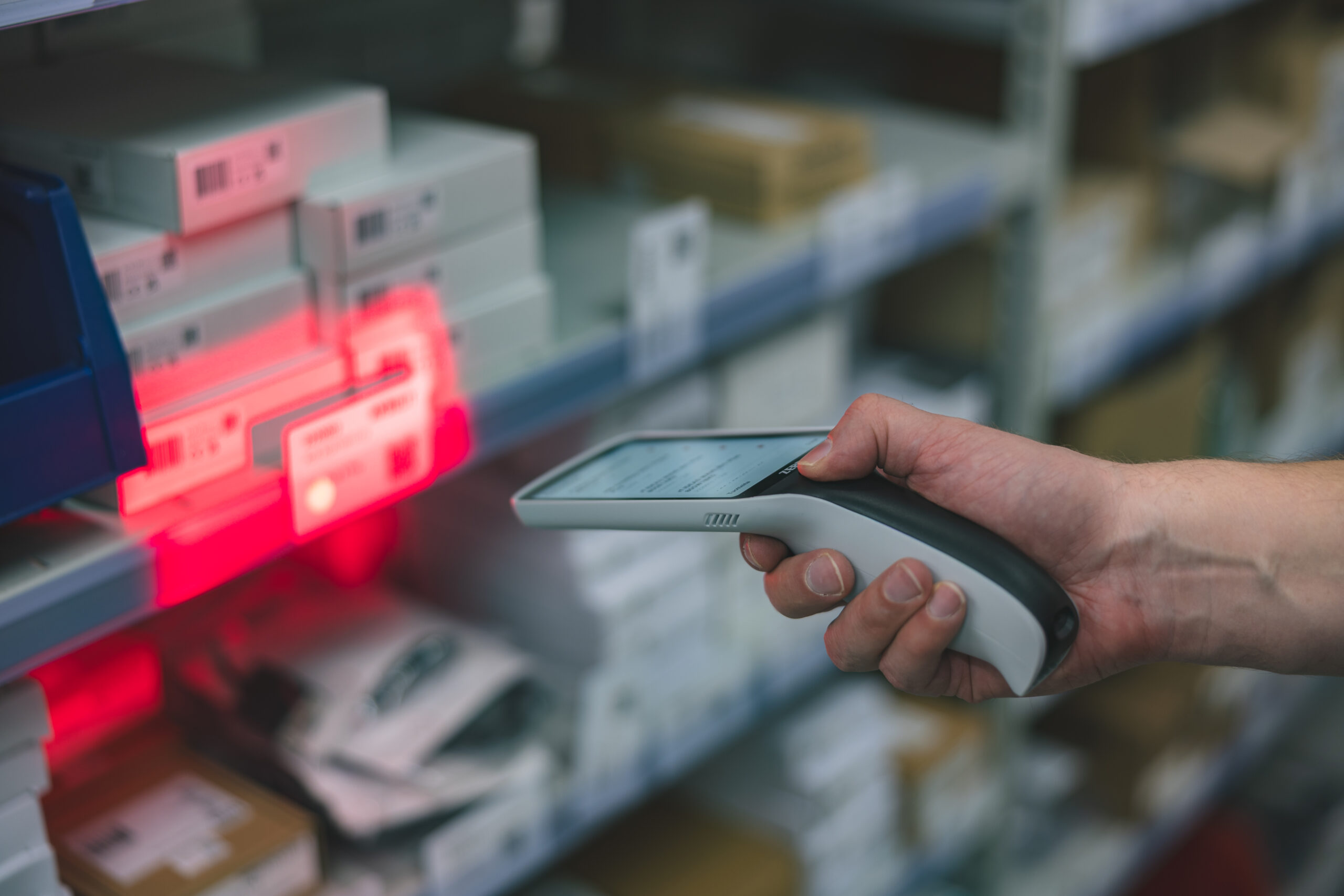
How do you track calibrated tools and instruments in a warehouse?
You track calibrated tools and instruments in a warehouse by assigning each item a unique identifier and recording its calibration status, due date, and location in a central system. When a tool is taken out, returned, or reaches its calibration deadline, the system flags it automatically. This approach removes the guesswork from compliance and keeps your team working with tools they can trust. Below, we answer the most common questions about how calibrated tool tracking actually works in practice.
If you want to see what a modern tracking setup looks like, our smart cabinet solution is a good place to start.
What makes calibrated tools harder to track than regular inventory?
Calibrated tools carry more information than a standard item. A regular spare part just needs a location and a quantity. A calibrated instrument also needs a calibration date, an expiry date, a certificate reference, and sometimes a usage history. That extra layer of data makes manual tracking much harder to maintain reliably.
The stakes are also higher. Using an out-of-date calibrated tool in a manufacturing or quality control setting can invalidate test results, trigger a non-conformance, or cause a safety issue. With regular inventory, a missing item is an inconvenience. With a calibrated instrument, it can be a compliance failure.
There is also the problem of visibility. Calibrated tools often move between workstations, technicians, and departments. Without a system that records every movement, it is easy to lose track of where a tool is and whether its calibration is still valid when it reaches the person who needs it.
What tracking technologies work best for calibrated instruments?
The most effective technologies for tracking calibrated instruments are those that record tool movements automatically, without relying on people to manually log every action. Barcode scanning, NFC tags, and RFID are the three most common approaches, and each has its strengths depending on the environment and the number of tools involved.
Barcodes are low-cost and easy to set up, but they require line-of-sight scanning and manual effort. Someone has to physically scan each tool, which means the system is only as accurate as the people using it. NFC tags work similarly but are more durable and can be read without perfect alignment, making them a better fit for tools that are handled frequently.
RFID is the strongest option when you need to track many tools at once or want fully automatic recording. An RFID-enabled cabinet or reader can detect every tool inside it in seconds, without anyone scanning anything. For calibrated instruments where accuracy and speed both matter, this kind of automatic detection reduces the risk of human error and makes compliance far easier to maintain.
How does a smart cabinet system track calibration status automatically?
A smart cabinet tracks calibration status by linking each tool to its calibration record the moment it is placed inside. When you open the cabinet and remove a tool, the system logs the time, the user, and the current calibration status of that specific item. If the calibration is expired or due soon, the system flags it before the tool leaves the cabinet.
Our smart cabinet can inventory up to a thousand items in ten seconds. That speed means the system always has an accurate, real-time picture of what is inside, what has been taken out, and what needs attention. There is no need to manually check a spreadsheet or a paper log before picking up a tool.
The cabinet also sends alerts when a calibration deadline is approaching. Instead of discovering an expired certificate after the fact, your team gets a notification in advance. This gives you time to arrange recalibration without disrupting work schedules or holding up production. You can explore how the smart cabinet works in more detail on our product page.
How do you maintain a calibration audit trail in a warehouse?
A calibration audit trail is a complete, timestamped record of every action taken on a calibrated tool: who used it, when it was taken out, when it was returned, and what its calibration status was at each point. Maintaining this trail reliably requires a system that records these events automatically rather than depending on people to fill in forms.
In a smart cabinet or connected tracking system, every tool interaction is logged in the background. You do not need to ask a technician to remember what they used last Tuesday. The record is already there, tied to their login and the exact time of access.
This kind of automatic logging is particularly valuable during audits. Instead of assembling records from multiple sources, you can pull a complete history for any tool in seconds. It also helps when a quality issue arises and you need to trace which tools were used during a specific production run or inspection. For more on how this connects to broader asset management, our article on serial number tracking for capital equipment covers the underlying approach in detail.
What happens when a calibrated tool goes out of compliance?
When a calibrated tool goes out of compliance, it should be immediately flagged, removed from active use, and quarantined until it is recalibrated or replaced. A tracking system handles this by changing the tool’s status automatically when its calibration expiry date passes, making it visible to anyone who tries to access it.
Without an automated system, out-of-compliance tools often stay in circulation simply because no one notices the expiry date has passed. This is one of the most common sources of calibration-related non-conformances in quality audits. A system that flags the tool at the point of use prevents this from happening.
The response process typically involves three steps:
- The system locks or flags the tool, preventing it from being issued without a supervisor override
- The responsible person receives a notification and arranges recalibration with the appropriate service provider
- Once the new certificate is uploaded, the tool’s status is updated and it re-enters the active pool
Keeping this process consistent across all tools and all users is what separates a reliable calibration programme from one that depends on individual diligence.
How do calibration tracking systems integrate with existing warehouse software?
Calibration tracking systems connect to existing warehouse software through a standard data interface that allows the two systems to share information automatically. This means calibration records, tool locations, and status updates can flow into your existing inventory or quality management software without manual data entry.
Integration matters because calibrated tools do not exist in isolation. They are part of a broader workflow that includes purchasing, maintenance, scheduling, and quality control. When your calibration data lives in a separate system with no connection to the rest, information gets duplicated, overlooked, or lost.
Our systems are already integrated with the existing software used by the majority of our customers. That track record reflects a deliberate focus on making sure new tools fit into the way your team already works, rather than forcing a change in process. For a closer look at how this works in an industrial setting, our article on smart cabinets for industrial tool management walks through a practical example. Our mobile app, Simple Pocket, also supports real-time updates from any location, so field teams and warehouse staff stay in sync without extra steps.
How do we help with calibrated tool management?
We build warehouse management systems that make calibrated tool tracking straightforward, accurate, and easy to maintain over time. Our smart cabinet is the centrepiece: it automatically records every tool that enters or leaves, tracks calibration status in real time, and alerts your team before a deadline is missed.
Here is what our solution delivers in practice:
- Automatic status tracking: Every tool’s calibration date is monitored continuously, with no manual checking required
- Instant audit records: A complete, timestamped log of every tool movement is always available
- Access control: Out-of-compliance tools are flagged at the point of use, preventing them from being issued by mistake
- Real-time visibility: You always know what is in the cabinet, what has been taken out, and what needs attention
- Smooth integration: Our systems connect with your existing software, so calibration data flows into your wider processes without extra work
- Mobile access: Our Simple Pocket app lets your team update and check tool status from anywhere, on Android or iOS
We have been developing warehouse and tracking systems since 2003, and we understand that every operation is a little different. We take time to understand your existing setup and find the approach that fits, rather than offering a one-size-fits-all product.
If you are ready to bring more structure to your calibrated tool management, take a closer look at our smart cabinet or get in touch with our team to talk through your specific needs. We are happy to help you find the right solution.